Türkçe
 English

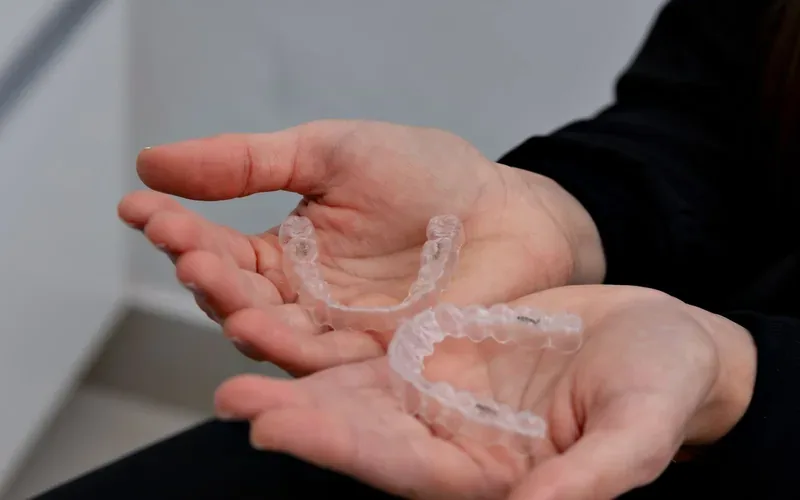
As a solution to the aesthetic and comfort concerns that are among patients’ biggest worries in orthodontic treatments, clear aligner systems are rapidly replacing traditional fixed braces. Clear aligner treatment is an orthodontic approach in which crowding and bite (occlusion) problems are gradually corrected with patient-specific thermoplastic materials.
The clinical success of clear aligner treatment is based on the digital planning carried out at the outset. Instead of traditional impression materials, intraoral scanners are used to transfer the patient’s teeth and jaw structure into a digital environment in three dimensions. When necessary, these data are combined with dental tomography (CBCT) images so that the positions of the tooth roots within the bone can also be evaluated. Using special software, the physician designs the millimeter-level movements of the teeth and the final bite position on the resulting 3D model. Patients can see the outcome to be achieved at the end of treatment through a simulation before treatment even begins.
While brackets in traditional braces apply pulling and pushing forces to the teeth, in clear aligner systems the aligners cover the entire tooth surface and create a guided pushing force. However, a smooth aligner surface alone is not sufficient to achieve difficult tooth movements such as rotation or root parallelism.
At this point, millimeter-sized protrusions made from tooth-colored composite filling material, called "attachments," are placed on the surfaces of certain teeth. Attachments act as levers that ensure the aligner fits the tooth snugly and that the targeted biomechanical force is transmitted with the correct vector. At the end of treatment, these composite structures are cleaned off with polishing without damaging the tooth surface.
According to the approved digital treatment plan, the patient’s entire set of aligners is produced using 3D printer systems. Each aligner is programmed to move the tooth approximately 0.2 to 0.25 millimeters toward its intended final position.
Wearing Time: For biological tooth movement to occur and the bone resorption-formation cycle to be triggered, the aligners must be worn for at least 20-22 hours a day. The aligners should only be removed while eating and when consuming hot/staining beverages.
Replacement Interval: Depending on the patient’s age, bone metabolism, and the nature of the planned tooth movement, aligners are generally changed at intervals of 7 to 14 days as determined by the physician.
Interproximal Reduction (IPR): In cases where crowding is severe but tooth extraction is not required, minimal enamel reduction of 0.1 to 0.5 mm is performed on the interproximal surfaces of the teeth (Interproximal Reduction) to create space for tooth movement.
The greatest clinical advantage of clear aligners is that oral hygiene can be maintained much more efficiently compared with traditional braces. Because the aligners are removable, flossing and brushing routines are not hindered; thus, the risk of gingivitis and enamel demineralization (white spot lesions) is minimized. However, the effectiveness of the aligner depends entirely on the patient’s discipline in wearing it. Insufficient wearing time leads to the teeth failing to reach the planned position (loss of tracking).
Once the active treatment process is completed, maintaining the result achieved is a clinical necessity. To allow the bone tissue to adapt to the new position, a fixed protective wire (retainer) is applied to the inner surfaces of the teeth, and clear retention aligners (Essix) are provided for nighttime use. Neglecting the retention protocol will result in the teeth returning to their former positions (relapse).
Let us take a look together and go over your treatment options. Feel free to call us with any questions.