Türkçe
 English


One of the most common infectious conditions encountered in dental practice is periodontal disease, which affects the supporting tissues of the tooth (the gums, periodontal ligament, and alveolar bone). Gum diseases are not only an oral health issue; when left uncontrolled, they are chronic inflammatory processes that can negatively affect many systemic conditions, from the cardiovascular system to diabetes. For this reason, preserving and treating the health of periodontal tissues is one of the primary priorities in our clinic.
The primary cause of gum diseases is the microbial dental plaque that accumulates on tooth surfaces. As a result of inadequate oral hygiene, this plaque reacts with calcium and phosphate ions in saliva, hardens, and takes the form of "tartar" (calculus).
Due to its porous structure, tartar creates an excellent retention area for bacteria. The toxins secreted by bacteria trigger the immune system, leading to inflammation in the gums (gingivitis). If no intervention is made at the gingivitis stage, the inflammation progresses to the bone tissue; the attachment between the tooth and the gum weakens, pathological spaces called "periodontal pockets" form, and bone loss in the jaw begins (periodontitis). Periodontitis is the most common cause of tooth loss.
Our patients usually present to the clinic with the following symptoms:
Spontaneous bleeding during brushing or flossing (the earliest and most prominent symptom).
Changes in gum color (from light pink to bright red), swelling, and edema.
Halitosis (chronic bad breath) and a persistent bad taste in the mouth.
Gum recession and the resulting tooth root sensitivity.
In advanced stages, tooth mobility and pain while chewing.
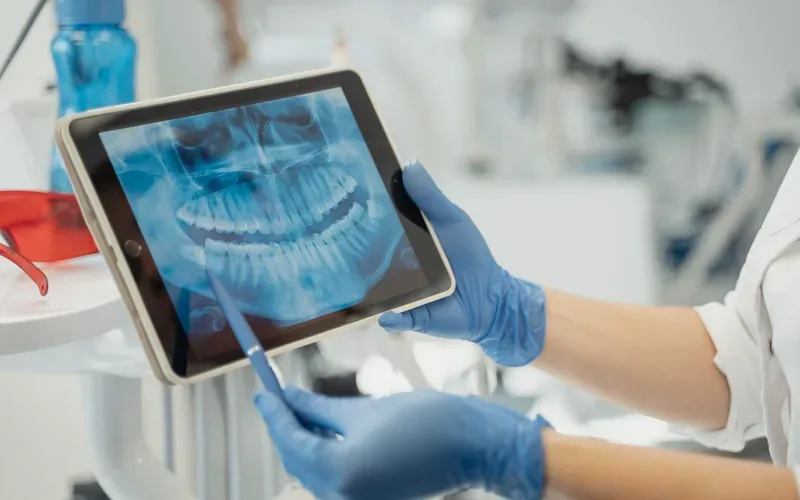
The diagnosis is made through millimetric measurement of the pockets with a "periodontal probe" during the clinical examination and detection of bone loss with panoramic/periapical radiographs.
Create interactive visual
Depending on the stage of the disease, we apply different non-surgical and surgical treatment protocols:
This is the first and most essential stage of all periodontal treatments. Using ultrasonic devices (cavitron) and hand instruments (curettes), deposits (plaque and tartar) on the tooth surface and beneath the gums are removed (scaling). When necessary, under local anesthesia, the procedure called "Root Planing" (Root Planing/Curettage), in which necrotic (dead) tissues and deep periodontal pockets on the root surface are scraped, is performed. The aim is to eliminate the bacterial load and create a smooth root surface so that the gum can reattach to the tooth (new attachment).
This is the surgical stage applied in the presence of deep periodontal pockets (5 mm and above) that do not respond to initial treatment. Under local anesthesia, the gum tissue is lifted from the bone as a flap (Flap Surgery); root surfaces and bone defects are cleaned under direct observation. Depending on the shape of the bone loss, bone powder (graft) and membrane applications (Guided Tissue Regeneration) are used in the area to target the biological regeneration of lost tissues.
The long-term success of periodontal treatment is directly related to the patient's daily oral hygiene routine. Brushing twice a day with the correct technique, and using interdental brushes and floss are an inseparable part of treatment. In addition, for individuals with periodontal disease, attending routine check-ups and maintenance cleanings at our clinic at least every 6 months is critical to preventing recurrence of the disease. Smoking directly impairs wound healing and must therefore be stopped completely during the treatment process.
Let us take a look together and go over your treatment options. Feel free to call us with any questions.