Türkçe
 English


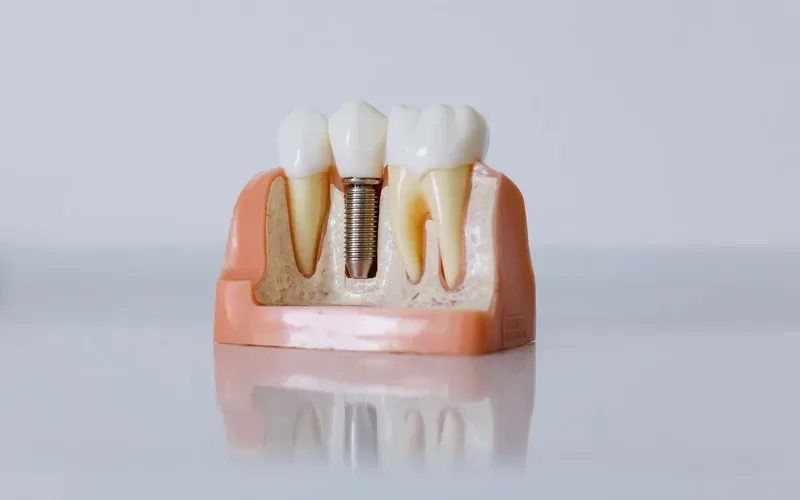
In our clinical practice, implant treatment is among the methods we most frequently use for the rehabilitation of missing teeth and is one of the most standardized approaches. An implant, in medical terms, is a titanium screw with high tissue compatibility that is placed into the jaw (alveolar) bone to assume the function of the missing tooth root. This treatment aims to restore the patient’s chewing function and aesthetics without intervening in the surrounding tissues or adjacent teeth.
As a physician, when deciding on an implant, we evaluate the patient’s radiological and clinical data as a whole. The main indications for this treatment are as follows:
Single Tooth Loss: The missing tooth area is treated directly without the need to cut adjacent healthy teeth and make a bridge.
Partial Tooth Loss: In patients who have lost posterior teeth and do not have abutment teeth for a fixed bridge, it eliminates the need for a removable denture.
Edentulous (Total) Cases: It is used in patients who have lost all their teeth to slow bone loss (resorption), increase the stability of total (full) dentures, or enable a transition to fully fixed prostheses.
The treatment process requires a biological healing timeline. The protocol is generally completed in four main stages:
Radiological and Clinical Evaluation: In the first session, a 3D dental tomography (CBCT) scan is used to examine the volume, density, and anatomical relations of the jawbone (nerve canals, sinus cavities). If the bone volume is insufficient, graft (bone powder) addition to that area is planned first.
Surgical Procedure: Under local anesthesia and in fully sterilized conditions, the titanium screw is placed into the socket prepared in the jawbone. The surgical time for a standard case is approximately 15-30 minutes, and no pain is felt during the procedure.
Osseointegration (Fusion with Bone) Process: Before chewing forces are applied to the implant, it is allowed to integrate with the bone cells. Depending on the patient’s bone structure, this waiting period is approximately 2-3 months in the lower jaw and 3-4 months in the upper jaw.
Prosthetic Loading (Prosthesis Stage): Once healing is complete, impressions are taken through the implant. Zirconia or metal-supported porcelain crowns prepared in the laboratory are fixed onto the implant, and the treatment is completed.
As with any surgical procedure, case selection is essential in implant surgery. Healing may be adversely affected in patients with uncontrolled diabetes, active radiotherapy to the head and neck region, severe osteoporosis, or use of intravenous bisphosphonate medications.
However, the risk factor we encounter most often in clinical practice is tobacco use. Heavy smoking is one of the primary factors that impair oral blood circulation and wound healing, leading to failure of the implant to integrate with the bone (early implant loss).
After the procedure, our patients’ strict adherence to clinical protocols determines the long-term success of the treatment:
A cold compress (ice) should be applied externally to the surgical site for the first 24 hours.
On the day of the procedure, hot and hard foods should be avoided, and a warm-soft diet should be preferred.
The prescribed antibiotics, analgesics (painkillers), and chlorhexidine-containing mouthwashes should be used regularly for the specified period without interruption.
After implant treatment is completed, neglecting oral care with the misconception that "implants do not decay" is a clinical mistake. The microbial dental plaque that causes gum disease in natural teeth also causes bone loss around implants (peri-implantitis), and this condition may result in implant loss. Therefore, daily brushing, use of interdental brushes/floss, and routine physician check-ups every six months are essential for the maintenance of the treatment.
Let us take a look together and go over your treatment options. Feel free to call us with any questions.